Pharma’s China bargain and what it means for Europe
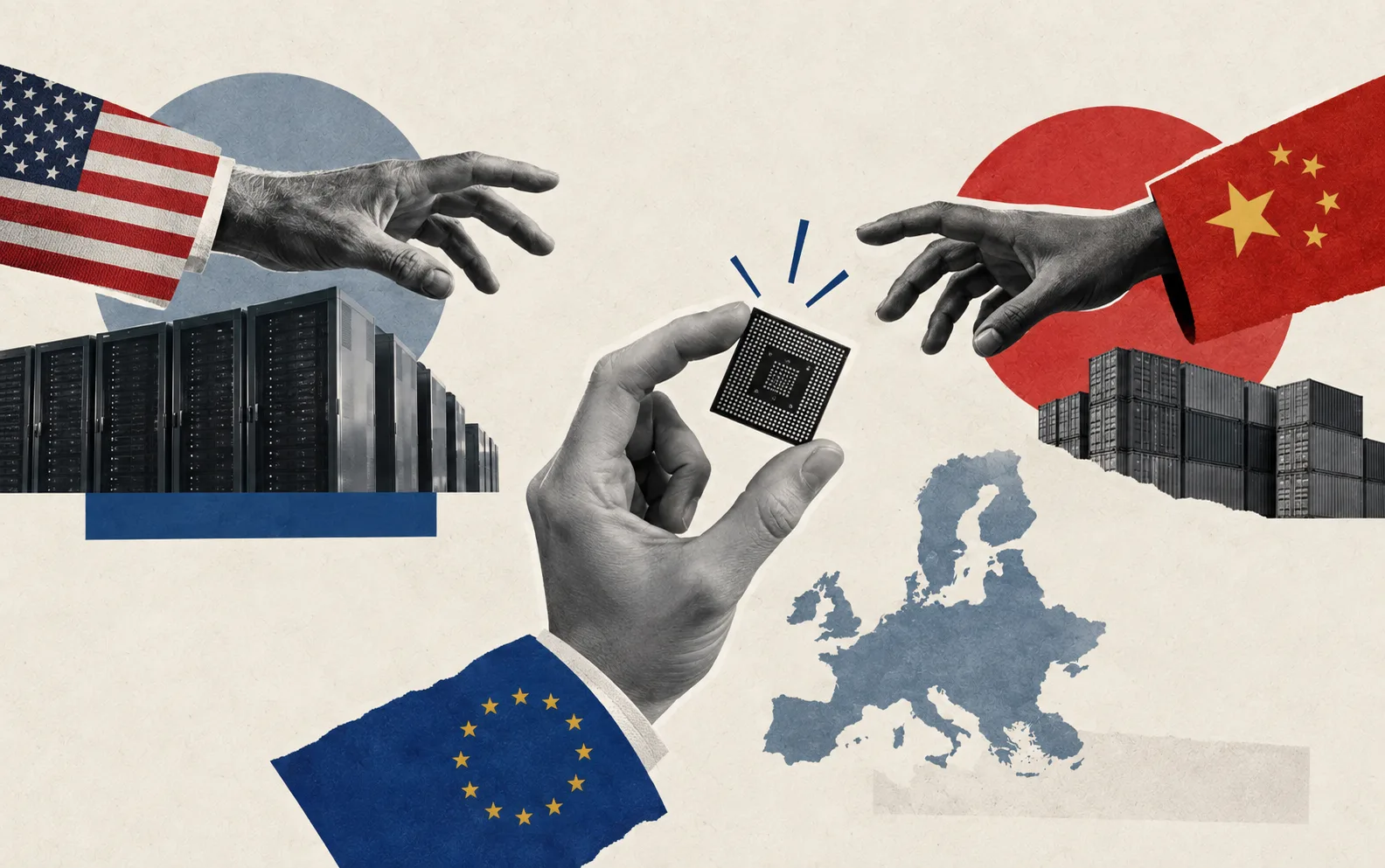
There is something puzzling about the current direction of biopharma. In most critical sectors considered strategic, geoeconomics are pushing policies towards reduced exposure to China. Sectors such as critical minerals, cloud infrastructure, semiconductors are gradually reorganized around resilience and strategic autonomy.
Biopharma is seemingly moving in the opposite direction. Pharmaceutical companies are increasing their reliance on Chinese biotechs for pipeline assets and development execution. The global biopharma ecosystem is deeply interconnected in its science, partnerships, and capital flows. Arguably, its dealmaking between Western pharma and Chinese biotechs can be read as an intensification of that interconnection, driven by a combination of looming patent cliffs (at more than $200b of branded revenue exposed to patent expiry by 2030 the largest cliff the industry has ever confronted), and the significant advantages in terms of speed and efficiency that the Chinese ecosystem has to offer.
However, the direction of dealmaking, the growth of Chinese clinical trial activity and the scale of licensing capital moving into Chinese platforms raise a more uncomfortable question: how will this trend impact the geography of biopharma’s science and innovation base itself, what does it mean for smaller biotechs, and what dependencies will it generate at a time of increased geopolitical tensions.
In the US, this debate is dividing opinions in the sector, has reached significant intensity and the attention of policy-makers, with a harder national security logic and resulting policy uncertainties. Europe has its own stake in this debate, which is for now distinct from the national-security-tilted debate in the US. Increasingly, Europe is looking at this through geopolitical glasses, at least in political intent. The Biotech Act proposal is a case in point: it sits across the EU’s competitiveness, health resilience and economic security agenda. However, relevant levers remain spread out in different legislative frameworks (HTA, procurement, research funding, investment screening etc), each with a different theory of security and competitiveness. Europe has yet to convert that geopolitical lens into the capabilities that economic security requires: scaling science into clinical assets, turning the single market into bargaining power, and ensuring that openness does not become unmanaged dependence.
More fundamentally, while Europe rightly prides itself in its strong innovation and science base – by the European Commission’s own account, EU scientists author around 21% of the world’s top biotech publications - a share comparable to the United States and China - that base is not immutable. It is linked to a stack, modality by modality, of basic research, clinical research and trial infrastructure, health data, AI capabilities, biomanufacturing capacities and skills, talent, capital and IP. The geopolitics and policies such as MFN are both magnifying and intensifying Europe’s pre-existing weaknesses (lack of scaling capital, regulatory complexity, fragmented markets, slow uptake). For Europe, the issue is whether its openness is matched with stronger capabilities needed to avoid strategic dependence. If most parts of the stack move elsewhere, can the science base remain intact or even strengthen, or will it weaken? And if that is at stake, what should Europe do about it?
01 | The full stack logic of China’s biopharma ecosystem
China-origin biotech assets have now become a leading source of external pipeline replenishment for Western pharma companies. According to Tim Opler, Managing Director at Stifel, in 2026 so far, “more than half of large pharma licensing dollars have been spent on Chinese drugs(3)”. Chinese out-licensing reached around $135.7bn in 2025. A more important figure is the 76% increase in average deal size which reflects the qualitative evolution of the licensing deals.
The precise numbers vary by methodology and should be interpreted with care, as figures often measure total potential deal value rather than upfront or realized value, but the trend is clear.
Looked at in terms of pipeline exposure, one recent scan of 12 top pharma companies found that even the most China-forward companies has sourced around 7.6% of their pipelines from Chinese companies. However, pipeline share is a lagging indicator which the sustained shift in the flow of dealmaking is likely to impact.
MassBio’s most recent China Watch data contained in its Industry Snapshot Report 2026 was particularly striking. It shows China’s total drug pipeline growing at 36.2% year on year to 7,105 candidates, passing Europe for the first time, while the US remained larger at 12,769 candidates, but grew only by 0.6%. China is also running more early-stage clinical trials than any geography analysed in that report. EFPIA figures suggest Chinese-headquartered companies originated 46 out of 104 new active substances in 2025, more than the US and Europe combined.
China’s objectives are clear. Biomedicine has been a component of China’s “biological industry”, one of seven strategic emerging industries. More recently, the 2026 Government Work Report named “biomedicine” among China's “emerging pillar industries”. The subsequently adopted Five-Year Plan Outline classifies biomedicine both among the strategic emerging industries to be developed and provides for the cultivation of emerging pillar industries. Official explanations of the Outline identify biomedicine as one of those industries. Formalized by 15th Five-Year Plan (2026-2030), it also calls out biomanufacturing as a future industry priority. In order to “greatly boost [China’s] scientific and technological self-reliance” (as outlined in its 15th five-year plan), and accelerate the cultivation of new quality productive forces, China has also launched its “National Venture Capital Guidance Fund” on 26 December 2025, to which it allocated $14b as seed capital, aimed to form a $144b fund through additional sources, eg regional funding, private capital and other. Among the technologies targeted by this fund feature biomedicine, AI and brain-machine interface. At least 70% of capital must go to seed and early-stage enterprises.
China has developed significant industrial-scale capabilities built for efficiency: generating candidates, optimizing molecules, moving rapidly into early clinical trials, scaling development and producing assets attractive enough for Western pharma companies to license. One analysis highlighted that “one Chinese company took a cancer drug all the way to approval for $172M, versus an estimated $700M for a similar US drug” and that “if you want to run a lot of shots on goal cheaply and fast, China today is objectively the best place in the world to do it”. This is critical, as biotech competitiveness depends on building the full stack into a self-reinforcing ecosystem, efficiently and at speed.
China is not currently dominating early scientific questions of what targets to pursue and mapping the underlying biology and is sometimes criticized for benefiting from fundamental research performed elsewhere. That same analysis of Chinese drug-regulatory filings against target databases found that Western pharma companies were still leading China by 127 to 21 in truly first-of-their-kind drugs and on brand new drug targets, 71 to 41, and almost all of China's are brand new science from the last two years. For some observers though, this is likely to shift with China strengthening its first-in-class innovator capacity.
02 | Pharma’s Faustian bargain in a fragmenting world
These developments have intensified US policy debate, where Lawmakers, investors, biotech executives, and pharma companies are at odds over whether China biotech represents a source of needed innovation that benefits patients or an outsourcing of science, a strategic threat to national security and to the US’ global dominance.
This has brought policy uncertainty for the sector. Several proposals are under discussion. One is a call to prohibit FDA from “accepting, reviewing, or considering” clinical trial data generated at sites in China, Russia, Iran, or North Korea in support of Investigational New Drug (IND) applications. Another is a push by lawmakers to expand outbound investment controls to biotechnology. A proposed Biotech Investment National Security Act (BINSA), a bipartisan legislative proposal introduced in the U.S. Congress, would add biotechnology to the list of prohibited and notifiable technologies under the Comprehensive Outbound Investment National Security Act (COINS Act), which became law as part of the FY 2026 NDAA and which establishes a statutory framework for restrictions and notification requirements relating to specified sensitive technologies and countries of concern, including China. The bill proposes a broad definition of “biotechnology,” covering the research, development, manufacturing, or commercialization of all “drugs” as defined in the Federal Food, Drug, and Cosmetic Act and all “biological products” as defined in the Public Health Service Act. Importantly, BINSA proposes to put biotech coverage and specified licensing arrangements and joint ventures directly into statute rather than leaving the issue to Treasury’s exercise of delegated authority. Treasury’s implementing regulations for the COINS Act are due by March 13, 2027. The pharma sector needs external innovation to address patent cliffs, R&D productivity pressures and rising cost constraints and has strong reasons to look towards China. Chinese assets can be cheaper, faster, and increasingly high quality. Recent deals are illustrative of their evolving nature and logic of buying into early optionality from China. This is commercially rational, scientifically productive and potentially good for patients. But drawing the analogy of a Faustian bargain would not be unreasonable, because the ecosystem is Chinese. China has demonstrated a willingness to turn economic dependencies into strategic leverage. Chinese biotechs operate in a political economy in which the state can influence data flows, outbound licensing, export controls, clinical infrastructure, investment approvals, technology transfers, market access, procurement and industrial priorities. Concerns have risen over the lack of a level playing field in the biotech competition with China.
The question is also whether Western pharma should become more structurally dependent, i.e. in a situation where disruption would have a material impact on patient access, R&D, sourcing for manufacturing etc, on an innovation system ultimately subject to political control by a strategic rival.
03 | Towards a win-win division of labor in biopharma or an accumulation of dependencies?
There are two readings to the dependency argument. Something that transpired clearly in a recent heated debate organized by Endpoint News at the beginning of August that debated the rise of China, the US response and how it will shape the global future of biotech for patients, companies, governments, founders and investors.
On one reading, Chinese biotechs still lack the critical capabilities on which western pharmas lead: late-stage development, regulatory navigation, payer engagement, launch infrastructure, global manufacturing, supply and commercialization. That side of the argument states that China has excellence in lowering execution risk but the commercialization value is still captured by Western pharma, and that the threat level emanating from a new molecule is minimal (unlike a piece of software in an electric car or a windmill). The result is a mutually beneficial division of labor.
An alternative reading is more strategic: if an ecosystem becomes effective at running rapid and cost-effective clinical trials, generating high-quality data and operating reusable discovery of development platforms, then multinational pharma companies may increasingly rely on sourcing assets from that ecosystem. The recent evolution of China-originated out-licensing suggests this is not just a hypothetical point. Nor is the depth of expertise it is building in specific modalities such as ADCs and bispecifics, and certain areas of cell and gene therapy, such as CAR-Ts. China might not need to build globally operating companies to matter strategically. Upstream relevance can create dependencies, even where downstream commercialization remains firmly Western/US-led.
The jury is still out which way this will go. The expansion of China-origin licensing is consistent with a shift towards greater upstream relevance. Markers to watch to assess whether the shift becomes systemic are a rising share of pharma’s priority pipeline originating in China, scarcity through a growing inability of sourcing innovation through in-house capacities or alternative sources, strengthening bargaining power of Chinese licensors, growing reliance on external in-licensing and strategic exposure to policy disruptions that impact access to assets, data, talent, clinical trial capacity. For smaller European biotechs, the issue is immediate, facing tougher funding conditions, lower valuations and more demanding differentiation tests.
Two questions are key: whether China becomes sufficiently important to the generation of assets that Western commercial strength no longer guarantees innovation independence; and whether Chinese companies will eventually follow in the footsteps of BeOne Medicine and scale their own global commercialization capacity.
04 | And Europe in all this?
Irrespective of whether it is a good idea, the US can contemplate a harder line on Chinese-origin biotechs because it has three things Europe lacks at comparable scale and in combination: a deep and rich biotech ecosystem coupled with strong capital markets, the disproportionate size of its pharmaceutical market in global revenue and its commercialization heft acting as global leverage. The European debate is different and more difficult in some ways. Europe must not fall into a spectator role of the growing US-China tensions in biopharma. There are important implications to this for Europe that it needs to anticipate.
One underlying reproach by industry towards Europe, echoed in the US’ MFN and Section 301 investigation arguments, is that Europe fails to view pharma strategically because governments keep pharmaceutical prices low and treats pharmaceutical spending as a health-budget line rather than a lever of industrial and geopolitical positioning. The frustration is understandable, but the argument skims over the fact that Europe faces a harder equation where each path of action comes with both advantages and downsides: restricting China-origin innovation would have a negative impact on patients, embracing it without conditions risks deepening dependence on China’s industrialization layer, if it keeps prices low without strategic coordination, it reduces its attractiveness and inversely, a raise would strain healthcare resources. The impact of the US’ MFN policy shows that European pricing decisions are no longer purely domestic decisions. Tradeoffs are becoming more complex and Europe has not yet built the institutional mechanisms and closer cooperation to manage that reality.
The recently leaked paper on MFN by the European Commission is telling in that respect. Its narrow mandate, and the evolving nature of US policies explain its cautious stance. But that is also what is revealing about the paper. It does not go beyond this frame to look at MFN within Europe’s strategic and competitive position between the two leading centres of biopharmaceutical innovation, and as one element in a wider reordering of the global pharmaceutical landscape, one in which the US retains deep capital markets and commercial gravity while China strengthens its position in asset generation and development execution. Europe will eventually have to ask not only whether MFN affects launches but also how it should price, procure and assess China-origin innovation.
05 | What Europe can build, what Europe must manage
Europe should focus on selective capacity-building where it has scientific depth and strategic relevance. It absolutely has to retain its strength in science. Having the technological edge and scientific depth is key in a geopolitical world. But this is not enough. Europe has never lacked capacity for inventing new medicines, yet it has through the years lost its preeminent place as a base for R&D and as a first-launch market. It needs to double down on scaling capital, clinical trial networks, quality data, tailored regulation, manufacturing capacity and early payer engagement with clear and predictable demand signals, precisely because science is part of a broader ecosystem. Its fragmented trial environment remains an industrial weakness. This is partly addressed with the Biotech Act proposal and some of the European Parliament’s amendments, but other issues, such as speed of patient recruitment and harmonized contracting, are just as important as is tracking time-to-first-patient and trial-start delays. The Act’s focus on de-risking and public financing is essential. Europe should seek appropriate returns that strengthen Europe’s industrial and R&D capabilities, linking public support to European capability formation in R&D, manufacturing, data governance, skills.
Europe must reflect its doctrine of economic security in all policies also in biopharma and should ensure it keeps a level of managed exposure that understands and conditions risk. It needs to map more closely what is happening in China, in which modalities and technologies strength is building, where the US will move next in terms of greater scrutiny and mandatory notification requirements, and what that can mean for Europe. Europe should map exposure at product and platform level and identify relevant areas of dependencies, e.g. in originator IP, clinical data, trial recruitment, manufacturing, starting materials, technology transfers etc. Sensitive health data or dual use technologies should receive targeted and structured scrutiny. The goal is to understand and condition risk but also understand that none of the structural advantages of China can be changed just with increased controls and restrictions.
Different futures, few choices
Today’s context holds many variables that make prediction of how this plays out difficult. Pharma has long benefited from acting as if the world were flat. For all intents and purposes, it looks like right now, Western pharma is becoming more reliant on China-origin assets. Cutting off the ability to make licensing deals would come at a high cost, including for patients. Arguably, the US’ drug pricing policies might also be piling on pressure on its pharma sector which might in turn have negative effects on its ability to dominate global commercialization of new medicines.
Early development is where science learns. If that learning loop moves it might also impact the location of science. Science is part of an ecosystem, and Europe must double down on becoming world-class at supporting its science strength, accelerate scaling capital availability, and design clear and nimble pathways to access with strong demand signals.
While Europe is in a very different position and unable and unwilling so far to substantially change the attractiveness of its single market in a manner that competes with the US, it should address its own bottlenecks with real sense of urgency while doubling down on building its strengths. This may come as a revelation to some, but Europe has many of the ingredients for the full stack: basic science, strong clinical research centres, among the best quality health data, regulatory excellence, highly qualified people, high quality and reliable manufacturing. It just needs to connect it, infuse capital, and act on it to its own advantage. Eventually, it also needs to tackle its market fragmentation and fully acknowledge the role played by national pricing and reimbursement frameworks. One lesson from the US’ MFN policy is already plain to see: that the US’ biggest leverage is its market size and capital depth, more than any other policy intervention. Europe has already seen one relocation of pharma value creation in the past and is at risk of facing a relocation of asset-generation and clinical learning in the future. With various initiatives under debate, now is the time to prevent that from happening.
Notes
-
Pareras, Luis MD PhD (2026): The four shocks coming to biotech venture capital: DPI, China, AI, Pricing. Perfect Storm or Perfect Opportunity, Invivo Partners; see also: https://www.deloitte.com/be/en/services/consulting/perspectives/navigating-the-pharmaceutical-odyssey.html
-
LinkedIn post by Commissioner Olivér Várhelyi: https://www.linkedin.com/posts/oliv%C3%A9r-v%C3%A1rhelyi_biotecheu-biotechact-healthinnovation-activity-7495022872294395904-HqcE; see also: the Commission staff working document accompanying the Biotech Act, C(2026) 3375 final Part 1/2, section 2.3, p. 11, which notes 'a publication record comparable to that of the US and China, with all three regions having between 20 to 25% of the top 10% most cited publications across biology, biomedical research and clinical science', sourced to DG Research and Innovation, Science, research and innovation performance of the EU 2024, pp. 151–229
-
Opler, Tim (2026): Science, Democracy and the Public Good: A proposal for a new policy to enhance American competitiveness in the life sciences, Georgia Life Sciences Summit Keynote, Stifel, August 26, 2026; see also Evaluate, World Preview 2026 (23 June 2026), forecasting that Chinese assets would account for more than two-thirds of total deal value in 2026.
-
Kesin, Alex (2026): China has caught up in biotech. How screwed are we?, Alex Kesin's Pharmacopoeia, July 07, 2026 (https://www.alexkesin.com/p/china-has-caught-up-in-biotech-how)
-
MassBio (2026): 2026 Industry Snapshot Report, MassBio, August 2026: https://www.massbio.org/wp-content/uploads/2026/08/2026_MassBio_IndustrySnapshot_Final.pdf
-
EFPIA (2026): The pharmaceutical industry in figures – key data 2026, EFPIA
-
"In 2010, the State Council officially classified the bioindustry as one of China's seven Strategic Emerging Industries. The government subsequently defined seven core sectors of bioindustry in 2012: biomedicine, biomedical engineering, bio-agriculture, bioenergy, bio-based manufacturing, bio-environmental protection, and biotech service." From: https://link.springer.com/chapter/10.1007/978-3-032-07112-5_22
-
National Development and Reform Commission, SCIO Press Conference of the Fourth Session of the 14th National People's Congress, 6 March 2026. https://english.www.gov.cn/news/202603/06/content_WS69aad83ec6d00ca5f9a09a9c.html
-
The State Council of the People's Republic of China (2026): Report on the Work of the Government, 2026 NPC & CPPCC special coverage, english.www.gov.cn, 5 March 2026: https://english.www.gov.cn/2026special/2026npcandcpcc/202603/05/content_WS69a8eea9c6d00ca5f9a09891.html
-
Xinhua (2025): China unveils national venture capital guidance fund to boost innovation, english.www.gov.cn, 26 December 2025: https://english.www.gov.cn/news/202512/26/content_WS694e4e56c6d00ca5f9a08486.html
-
Kesin, Alex (2026): China has caught up in biotech. How screwed are we?, Alex Kesin's Pharmacopoeia, July 07, 2026 (https://www.alexkesin.com/p/china-has-caught-up-in-biotech-how)
-
Kesin, Alex (2026): China has caught up in biotech. How screwed are we?, Alex Kesin's Pharmacopoeia, July 07, 2026 (https://www.alexkesin.com/p/china-has-caught-up-in-biotech-how)
-
For example, see the recent speech of 26 August 2026 by Tim Opler, in which he observes a decrease in fast-followers and a rise of first-in-class innovators, stressing that "China is being quite thoughtful about its industrial policy in the life sciences. If we are feeling some heat now from Chinese bioinnovation, wait another five years and it could get hellish in the biotech kitchen"; in: Opler, Tim (2026): Science, Democracy and the Public Good: A proposal for a new policy to enhance American competitiveness in the life sciences, Georgia Life Sciences Summit Keynote, Stifel, August 26, 2026
-
Report by the Committee on Appropriations, May 1, 2026: https://www.congress.gov/119/crpt/hrpt632/CRPT-119hrpt632.pdf, reported in various sources, e.g. Hogan Lovells Cadwalader, May 6, 2026: https://www.lexology.com/library/detail.aspx?g=9279403d-0b93-4414-ac0a-2a8004d8fd56
-
U.S. Congress, House of Representatives (2026): H.R. 9102 – Biotech Investment National Security Act of 2026 (BINSA Act), introduced 2 June 2026: https://www.congress.gov/bill/119th-congress/house-bill/9102/text
-
A good recap of key concerns is provided in: Céline (2026): "China Biotech: Feast of Famine, May 31, 2026 (https://biotechreadout.com/p/china-biotech-feast-of-famine)). See for example Scott Gottlieb (Senior Fellow at AEI, Partner at NEA, and former Commissioner of the FDA), https://x.com/ScottGottliebMD/status/2061803738155667769, quoted as saying: "China's new rules require approval before Chinese tech is transferred overseas. But U.S. drug tech is open for Chinese firms to parse for molecular leads that are quickly turned into competing medicine. Knowledge flows in one direction: into China not out."
-
The recording is available here: https://www.youtube.com/watch?v=RW070WS7beY
-
"EU Pharmaceutical Markets and Recent US Pharmaceutical Pricing Developments", leaked in Euractiv, 25 August 2026