Originally published in French by GTPO, this article was translated with the help of artificial intelligence.
Abstract
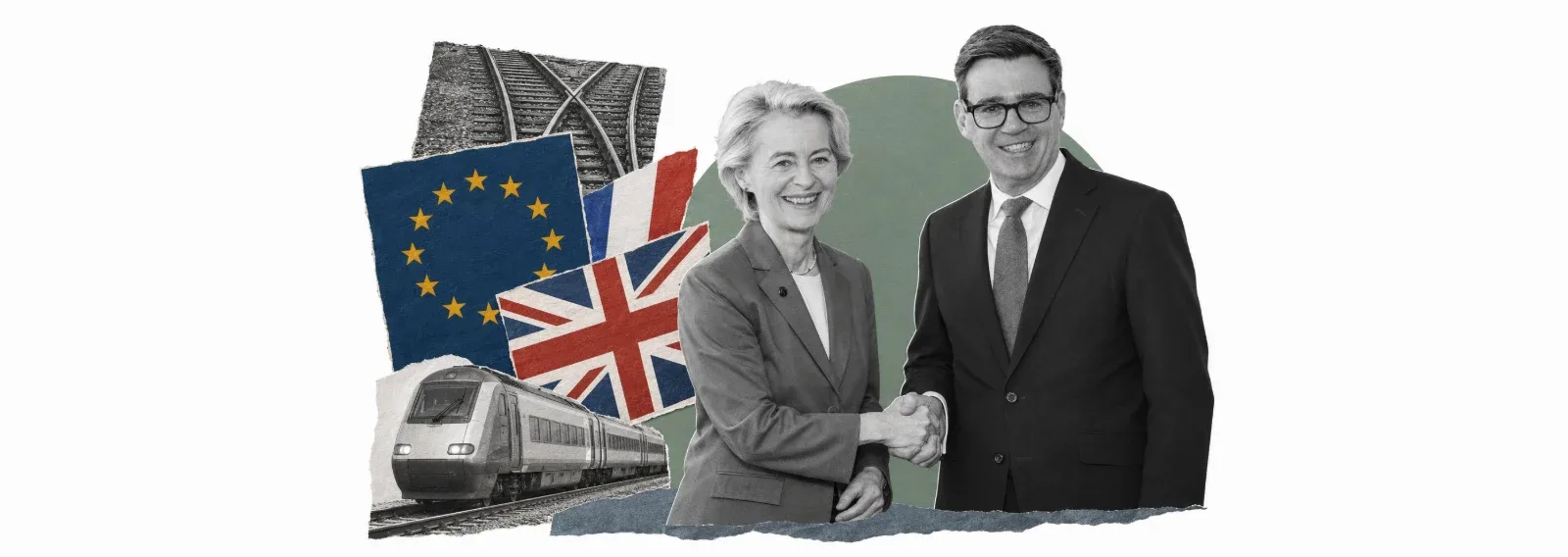
The second EU–UK summit, scheduled for 20 November 2026, could mark a new stage in the rapprochement begun under Keir Starmer’s government and continued by Andy Burnham’s.
Three agreements are the focus of expectations: the linking of carbon markets, intended to reduce the trade frictions that arise from emissions pricing; the creation of a temporary mobility scheme for young Europeans and Britons; and the establishment of a common sanitary and phytosanitary area, which would remove a large share of the checks weighing on agricultural and agri-food trade. Despite the progress made in the negotiations, persistent disagreements and the links established between the various files could nonetheless jeopardise the conclusion of all these agreements at the summit.
This analysis examines the economic benefits expected from the three agreements, the political obstacles to their conclusion and the regulatory and institutional concessions they would entail. It highlights the differences between the three files: while the linking of carbon markets and the sanitary and phytosanitary agreement would rest on lasting UK alignment with EU rules, the youth mobility scheme raises questions of reciprocity and political balance instead. Their negotiation nonetheless brings out a common problem: the difficulty of reconciling the UK’s wish to reduce the economic costs of Brexit with the preservation of regulatory and migration autonomy.
Beyond the still uncertain outcome of the summit, the analysis concludes that the rapprochement under way amounts neither to a return to the single market nor to a general reversal of Brexit, but to an attempt to mitigate some of its economic consequences. This approach could nevertheless herald a deeper change in the relationship between the European Union and the United Kingdom, as the benefits of cooperation lead to a re-examination of some of the trade-offs made on leaving the Union.
Introduction
Originally scheduled for 22 July 2026, then postponed following the change of UK Prime Minister, the second EU–UK summit, which is to bring together British and European leaders, will be held on 20 November in Brussels. Both sides have set high ambitions for this new milestone in bilateral relations, in an international context shaped by geopolitical and trade tensions, which shows every day how much cohesion among European democracies matters. The 20 November summit will therefore have to give concrete form to the “Reset” of EU–UK relations, to use the expression coined by Keir Starmer’s government, which from the moment it took office in July 2024 sought to promote closer cooperation between the EU and the UK without revisiting the choices of Brexit.
This positive momentum had been shared and endorsed by European leaders at the first EU–UK summit, held in London on 19 May 2025. That summit led to the adoption of a joint roadmap (Common Understanding)1 setting out several areas of cooperation intended to reduce the trade and regulatory frictions inherited from Brexit and to bring the two sides of the Channel closer together. Without calling into question the overall architecture of their post-Brexit relationship, this rapprochement made it possible to agree a solution on the highly sensitive issue of access to fishing grounds, and to open new negotiations covering a sanitary and phytosanitary (SPS) agreement, the linking of the EU and UK emissions trading systems (ETS), the creation of a youth mobility scheme and UK participation in the EU internal electricity market. The roadmap also provided for the UK’s reassociation with Erasmus+.
Since May 2025, implementation of this roadmap has advanced at different speeds. Reciprocal access to fishing waters has been extended until 30 June 20382, while the energy cooperation framework provided for by the Trade and Cooperation Agreement (TCA), which governs cross-border trade in electricity and gas as well as cooperation on security of supply and renewable energy, has been extended until 31 March 20273. A security and defence partnership has also been concluded4 to structure strategic dialogue and strengthen cooperation between the two sides, in particular on support for Ukraine, crisis management and defence industrial capabilities5. Finally, the UK’s return to the EU’s Erasmus+ student mobility programme was formalised in April 2026, with participation from January 2027, in exchange for a UK contribution of around £570 million6.
Three agreements are now the focus of expectations for the November summit: the linking of carbon markets (ETS), youth mobility (Youth Experience Scheme) and the (re)creation of a common sanitary and phytosanitary (SPS) area. Concluding them before the next summit was an objective explicitly set by the joint statement of 17 December 2025. As the summit approaches, the negotiations opened in autumn 2025 have made considerable progress but remain unevenly advanced. A draft SPS agreement is reported to have been agreed between EU and UK negotiators and sent to EU Member States for approval, alongside a draft agreement on the linking of carbon markets. Talks on youth mobility, by contrast, remain open, owing to disagreements between the EU and the UK over the number of beneficiaries allowed to take part in the scheme and over the tuition fees applicable to EU students at UK universities7.
In the final stages of the negotiation, the European Union appears to have sought to make the conclusion of the whole package conditional on a UK commitment to lower the tuition fees applicable to EU students. London, for its part, would like guarantees of preferential treatment under the EU’s forthcoming “Made in Europe” industrial policy provisions, which aim to favour products manufactured in the European Union for certain public procurement contracts and industrial support schemes. The UK government is thus seeking to prevent these new European preferences from penalising its companies, which are deeply integrated into the continent’s industrial value chains.
Against this background, three scenarios can be envisaged for the 20 November summit:
-
An overall compromise (medium probability), which would allow the three agreements to be finalised in full and the procedures required for their legal conclusion and entry into force to be launched immediately after the summit.
-
A partial political agreement (high probability), which would allow the SPS and ETS agreements to be initialled and agreement to be recorded on part of the youth mobility provisions, while negotiations continue on the questions still open, in particular beneficiary quotas and university fees. The procedures for the legal conclusion of the SPS and ETS agreements would then be suspended, so as to make their entry into force conditional on a satisfactory compromise on mobility. This solution would allow the EU to maintain its demands while leaving the UK government room to seek additional concessions in return, in particular on the UK’s treatment under the “Made in Europe” schemes.
-
A general deadlock (low probability), in which persistent disagreements over mobility and university fees would prevent any formal progress on the package, following the logic of a single undertaking (“Nothing is agreed until everything is agreed”).
Beyond the uncertainties surrounding the final parameters of these agreements and the timetable for their implementation, the adoption of this package would mark a new stage in post-Brexit relations, by confirming the UK’s choice of sectoral economic rapprochement with the European Union, at the price of greater regulatory alignment and a reduction in the very autonomy it sought when leaving the single market.
I. Linking Carbon Markets: Restoring Climate Convergence to Limit the Cost of Brexit for Industries Exposed to the Carbon Price
The UK’s withdrawal from the European Union led, on 1 January 2021, to its separation from the EU Emissions Trading System (EU ETS). London set up a national system, the UK ETS, based on a comparable mechanism: covered companies must surrender allowances corresponding to their greenhouse gas emissions, within an overall cap that is gradually lowered. The two systems pursue similar climate objectives but now operate independently8. Their carbon prices, emissions caps, allocation rules and reduction trajectories can diverge, at the risk of distorting competition between UK and EU industries. In October 2026, the average price of auctioned emission allowances thus stood at €86 per tonne of CO₂ in the EU, compared with €73 in the UK, a UK price around 15% below the EU price (Figure 1).
The EU’s Carbon Border Adjustment Mechanism (CBAM) is designed precisely to limit these distortions. Since 1 January 2026, the definitive regime of the EU CBAM has applied to imports of certain carbon-intensive goods, including steel, aluminium, cement, fertilisers, hydrogen and electricity. Its aim is to bring the carbon cost of products imported into the EU closer to that borne by EU producers, in order to limit the risk of carbon leakage to countries applying less stringent constraints. The UK exports concerned fall within the scope of the mechanism. The carbon price effectively paid in the UK can be taken into account in calculating the adjustment, thereby reducing the amount due under the EU CBAM. Taking it into account does not, however, exempt importers from the reporting obligations and administrative constraints attached to the mechanism, which constitute new frictions for trade between the two markets. The UK also plans to introduce its own CBAM from January 2027, which could bring comparable obligations for certain EU exports.
The linking of the two emissions trading systems (ETS) is intended to reduce these new trade frictions.
Linking will allow companies on both sides to use EU or UK emission allowances interchangeably to meet their environmental obligations. By connecting the two markets in this way, the agreement will encourage carbon prices to converge and reduce the risk of distortions of competition. In return, the negotiating mandate adopted by the Council of the EU in November 2025, which sets out the objectives and conditions given to EU negotiators, provides for dynamic alignment of the UK with the EU rules governing the functioning of carbon markets, as well as emissions caps and a reduction trajectory at least as ambitious as those of the EU system. The exact scope of these obligations will, however, depend on the provisions finally retained in the agreement. Maritime transport is a specific issue in this respect: whereas the EU ETS has since 2024 covered emissions from voyages between EU ports and 50% of those from routes to and from third countries, the UK system, extended to domestic maritime transport in July 2026, does not yet cover international voyages. London plans to include them from 20289, a timetable that the conclusion of an ETS agreement could bring forward.
In any event, linking would open the way to a reciprocal exemption from carbon border adjustment mechanisms, which is the main trade issue at stake in the future ETS agreement. This objective appears explicitly in the joint roadmap of May 2025 and in the EU negotiating mandate of November 2025. The EU CBAM Regulation does provide for the possibility of an exemption for countries whose carbon market is fully linked to that of the EU, subject to conditions relating to the effective pricing of emissions. Once the linking agreement has entered into force and these conditions have been verified, the European Commission could thus add the UK to the list of countries exempted from the EU CBAM, by means of a delegated act10. On the UK side, the Finance Act 2026 already provides for the possibility of introducing an equivalent exemption by regulations11. This reciprocal exemption regime would reduce the compliance costs and administrative constraints weighing on trade between the two markets.
The trade stakes are far from negligible: in 2025, UK exports to the EU of products covered by the EU CBAM amounted to at least £7.1 billion, or nearly 4% of UK goods exports to the EU market (Figure 2).
The economic benefits expected from linking thus rest on a political trade-off: to limit the trade consequences of the separation of carbon markets brought about by Brexit, the UK would have to give up part of its autonomy in defining and adjusting its emissions pricing policy. The choice is all the more symbolic because London had presented the creation of an independent UK carbon market in 2021 precisely as a means of pursuing an autonomous climate policy, one able to depart from EU rules.
II. Youth Mobility: Renewing Human Exchanges Without Restoring Free Movement
The end of the free movement of persons on 1 January 2021 profoundly changed the conditions of mobility between the UK and the European Union. UK citizens no longer have a general right to settle and work in the Member States, while EU nationals are subject to the UK immigration system for stays that exceed the applicable exemptions. The Youth Experience Scheme (YES) aims to restore a possibility of temporary mobility for young people from both sides. The scheme envisaged would allow its beneficiaries to stay for up to three years in the territory of the other party to work, study, travel or pursue other activities, such as volunteering or au pair work. Its final parameters remain to be negotiated, however, in particular the age conditions, the rights attached to the status and any quotas of beneficiaries.
The YES would therefore not amount to a restoration of free movement. Unlike the regime that applied before Brexit, it would not create a general and permanent right of residence or of access to the labour market for all UK and EU citizens. It must also be distinguished from Erasmus+: the UK’s reassociation with that programme, agreed in December 2025 following the first EU–UK summit and then formalised in April 2026, will take effect in January 2027. Erasmus+ allows students enrolled at EU or UK institutions to complete part of their course at a partner institution, without additional tuition fees, and to receive a grant towards living and travel costs. The YES follows a different logic: opening a route for temporary individual mobility, independent of an organised university exchange.
The YES negotiation remains sensitive for the UK on two counts.
-
The first concerns control of immigration, a central question in the Brexit debate. To take account of the politically sensitive nature of this file, the UK government wishes to make the YES subject to an annual cap on beneficiaries, whereas the European Commission initially envisaged an uncapped scheme. The positions mentioned during the negotiations point to an initial UK proposal of 50,000 places, or even 100,000 beneficiaries a year12. Such a cap would also raise the question of how places are distributed among Member States, a potentially sensitive one in Brussels, given that the European Union defends the principle of non-discrimination between its nationals.
-
The second concerns the funding of UK universities, which depend heavily on the tuition fees paid by international students13, at a time when more than a third of English higher education institutions are in deficit. Since Brexit, EU students coming to study in the UK no longer automatically qualify for domestic tuition fees (home fees) and are generally charged international fees, sometimes four to six times higher14. The European Commission, however, is asking that EU students be eligible for home fees. According to a Russell Group estimate, such a concession could mean a loss of income of £570 million a year for UK universities, at constant student numbers15.
Negotiations on youth mobility remain open as the summit approaches and could remain so once it is over, depending on the nature of the compromise reached. One solution envisaged by both sides would be to record a political agreement on the YES while continuing negotiations on home fees separately, which would nevertheless require a compromise on capping the scheme’s beneficiaries to be reached before the summit. The additional time thus granted to resolve the question of university fees could allow the UK to seek something in return for a possible concession, whether guarantees on its treatment under the EU’s future “Made in Europe” schemes or more favourable terms in the ongoing negotiations on its participation in the EU internal electricity market and the financial contributions that would go with it. For its part, the European Union could seek to preserve its bargaining power by making the legal conclusion and entry into force of the other two agreements in the “package”, on the linking of carbon markets and on sanitary and phytosanitary measures, conditional on a satisfactory compromise on the mobility questions still open.
III. The SPS Agreement: Correcting Some of the Trade Effects of Brexit on Agricultural and Agri-Food Trade in Exchange for Re-Anchoring the UK to EU Law
Since 1 January 2021, trade in agricultural and agri-food products between the UK and the European Union has been subject to customs formalities and to sanitary and phytosanitary requirements that did not apply when the UK was part of the single market. The Trade and Cooperation Agreement (TCA), applied since that date, has preserved the absence of customs duties for goods that comply with the rules of origin. It has not, however, removed the administrative and regulatory obligations inherent in the UK’s status as a third country. Companies must therefore now lodge customs declarations, prove the preferential origin of their goods in order to qualify for tariff exemption and, for the products concerned, meet sanitary or phytosanitary notification and certification obligations, as well as the checks applicable at the border.
These obligations generate fixed costs that can represent a large share of the value of consignments. They are particularly burdensome for perishable foodstuffs, whose marketing depends on short logistics lead times, and for small businesses, which lack the volumes needed to spread administrative costs across a large number of goods. The new formalities have thus altered the profitability of certain trade flows. Even without customs duties, a commercial operation that was viable before 2021 can become loss-making when certification costs, checks and additional delays exceed the margin earned on the exported products.
UK exports of agricultural and agri-food products to the EU fell to an index of 89 in 2021 relative to the 2015–2019 average, and by 2024 had only returned to their reference level in current value (index 100). EU exports to the UK, stable in 2021, rose instead by nearly a quarter (index 124 in 2024). The UK’s decline coincides with its effective exit from the single market and the entry into force of the TCA.
The SPS agreement envisaged between the European Union and the UK would remove a large share of the sanitary and phytosanitary barriers reintroduced since Brexit. It would rest on the establishment of a common regulatory area in which both parties would apply the same sanitary and phytosanitary rules to the products concerned. Their compliance would thus be guaranteed by the competent authorities of each party, responsible for controlling the conditions of production and marketing in their own territory. This regulatory convergence would restore mutual trust in sanitary control systems and, as a result, remove most certificates and routine border checks. Products could thus move between the two markets without systematically undergoing new sanitary checks on entering the territory of the other party. Comparable arrangements already exist between the European Union and certain third countries, such as the veterinary agreement with Switzerland.
The benefits of the agreement will go beyond simplifying existing trade. Removing a large share of certification and control obligations will reduce the administrative costs of exporting, border crossing times and the risk of supply chain disruption. The agreement will not, however, restore the free movement of goods as it existed when the UK was a member of the EU: customs declarations will remain compulsory and companies will still have to prove the preferential origin of their goods in order to benefit from exemption from customs duties.
At sectoral level, an examination of the agricultural and agri-food products whose exports have fallen most since Brexit makes it possible to identify certain sectors likely to benefit first from the SPS agreement.
Four sectors in particular combine high exposure to sanitary and phytosanitary checks with a fall of at least 15% in their exports to the EU since 2021, compared with 2015–2019: fresh fruit and vegetables, meat and fish preparations, cereals, oilseeds and fodder, and live plants (Figure 4). Fresh fruit and vegetables are the hardest hit: their exports fell by nearly half as early as 2021 (index 54) and remain at 52 in 2024, whereas meat and fish preparations have partly rebounded (from 55 to 68). Together, these sectors accounted for around $2.1 billion in annual exports to the EU before Brexit.
Small and medium-sized enterprises could also be among the main beneficiaries of the agreement. The fixed administrative costs of exporting weigh proportionally more heavily on their commercial operations, which may have led some of them to reduce their shipments or to give up the EU market since Brexit. Removing a large share of these costs could thus allow UK companies that had stopped exporting to return to the EU market, and vice versa.
The number of UK companies exporting to the EU has fallen all the more sharply the smaller they are: in 2023, it stood at 69% of its 2019 level for micro-enterprises and 78% for small enterprises, compared with 86% for medium-sized and 100% for large ones.
Yet SMEs account for 87% of exporting companies in the agricultural and agri-food sector in 2024, compared with 82% across all sectors, even though they generate only around 31% of the value exported. The companies most penalised by the rise in fixed costs are therefore also the most numerous in this sector, which makes them the first beneficiaries of an SPS agreement in terms of the number of companies concerned.
In absolute terms, the European Union exports considerably more agricultural and agri-food products to the UK than the reverse. In 2024, EU exports to the UK amounted to around $57 billion, compared with $18 billion for UK exports to the EU. Simplifying trade would therefore affect a greater value of goods on the EU side. This does not mean, however, that the Union’s economic gains would necessarily be greater, for three reasons.
-
The first lies in the asymmetric application of checks since Brexit. From 1 January 2021, the European Union subjected UK imports to the sanitary and phytosanitary requirements applicable to third countries. The UK, by contrast, repeatedly postponed the introduction of its own checks on EU products. The Border Target Operating Model (BTOM), published in 2023, organised their phased roll-out from 202416, according to product category and level of risk. Some checks have in fact still not entered into force: in October 2026, the UK government extended until January 2028 the exemption from phytosanitary checks for medium-risk fruit and vegetables imported from the European Union17. UK exporters were therefore confronted earlier with the new EU constraints, while their EU counterparts benefited from a more gradual, and still incomplete, implementation of UK requirements. Removing the checks could thus generate proportionally greater savings for some UK exporters, regardless of the volumes traded.
-
The second lies in the UK’s greater trade dependence on the EU market. Although EU exports to the UK are higher in absolute terms, the EU market generally represents a much larger share of UK agricultural and agri-food outlets than the UK does for EU exporters. Reducing SPS barriers therefore matters relatively more to UK producers.
In 2024, the EU absorbed 54% of UK agricultural and agri-food exports, whereas the UK accounted for only 23% of EU exports to third countries, a gap of more than 30 points (Figure 6). This gap has been stable since 2013: both dependencies fell in 2021, to 52% and 20%, before partly recovering.
- The third is that the SPS agreement could also ease trade within the UK itself, between Great Britain and Northern Ireland. Since Brexit, Northern Ireland has continued to apply part of EU legislation, in particular sanitary and phytosanitary standards, in order to avoid the return of a physical border on the island of Ireland. This situation has led to the introduction of complex formalities and checks on certain flows of goods coming from Great Britain. An SPS agreement based on the application of common rules in Great Britain and the European Union could substantially reduce these divergences. When the same sanitary and phytosanitary requirements apply in Great Britain and in Northern Ireland, a large share of the checks designed to prevent non-compliant goods from entering the EU market becomes superfluous. The agreement could thus reduce the costs associated with trade between the two parts of the UK. Its value would therefore extend beyond UK external trade alone, by easing some of the economic frictions attributable to Brexit within the UK itself.
Securing an SPS agreement will, however, require a major concession in return: the UK’s acceptance of dynamic alignment with EU rules for agricultural and agri-food products. In practical terms, the UK will have not only to apply the EU standards in force in the areas concerned, but also to incorporate their future changes into its own legislation. The EU negotiating mandate provides for a wide scope, going beyond sanitary and phytosanitary rules in the strict sense to include the production and marketing standards of many agricultural and food products. Regulatory alignment will cover both exporting companies and activities intended exclusively for the UK domestic market, and will also apply to imports from third countries, limiting the UK’s scope for regulatory divergence in its external trade relations.
Such a mechanism is a major political paradox of Brexit. Whereas leaving the single market was supposed to allow the UK to take back control of its regulation and free itself from EU standards, London now envisages complying with them on a lasting basis. The SPS agreement would thus enshrine, in the areas concerned, a political trade-off that is the reverse of the one behind Brexit: giving priority to the economic benefits of regulatory convergence over the hoped-for gains of regulatory divergence.
This trade-off is all the more telling because dynamic alignment will not be accompanied by a UK return to EU decision-making. The agreement is expected to institutionalise a mechanism for the European Commission to consult the UK government from the preliminary stages of drafting the rules concerned, so that it can put forward its positions. But this involvement is likely to remain strictly consultative18: London will take part neither in the deliberations of the Council of the European Union nor in the adoption of the texts with which the UK would then have to comply. It will also have to accept the jurisdiction of the Court of Justice of the European Union (CJEU) over the interpretation of the EU law covered by the agreement19. The UK would thus find itself in a situation comparable to that of the European Economic Area (EEA) states or Switzerland, which apply certain EU rules without having the decision-making rights of Member States.
This political cost has led the UK to try to preserve some room for regulatory autonomy, by negotiating exceptions in the areas where its rules have diverged from those of the Union. The draft agreement could thus provide for temporary exceptions for novel foods20, including cultivated meat, and for products derived from new genomic techniques. These arrangements would allow the UK to retain certain national authorisation regimes for the time being, without giving the products concerned automatic access to the EU market. Their final scope has yet to be publicly confirmed, however. These exceptions nonetheless raise a fundamental contradiction: the more the UK seeks to preserve its regulatory autonomy, the more it will limit the economic benefits of the agreement, since divergences will restrict the removal of barriers to trade in the areas concerned.
Conclusion
The second EU–UK summit should mark a new stage in the rapprochement begun in May 2025. The agreements envisaged would correct part of the economic consequences of Brexit without calling into question its main structural choices: the UK will remain outside the single market and the customs union, will keep an autonomous trade policy and will not restore general free movement of persons. The Reset, in the elements given concrete form in November 2026, will therefore not be a return to the pre-2021 situation, but an attempt to restore, in a targeted way and out of economic pragmatism, some of the conditions of integration lost with Brexit.
The implications of this rapprochement nonetheless go beyond the mere reduction of trade frictions. By accepting the principle of lasting regulatory alignment in certain areas, London will call into question one of the fundamental trade-offs behind Brexit: the priority given to regulatory autonomy over the benefits of economic integration. The prospect of a UK developing an economic model largely distinct from that of the European Union, sometimes summed up in the ambition of a “Singapore-on-Thames”, thus appears increasingly remote from the choices made by the UK government. This shift reflects a growing recognition of the economic bill for Brexit: having made autonomy from the European Union a political objective in itself, London now seems more willing to count its cost and to negotiate, sector by sector, the terms of a rapprochement.
This dynamic nonetheless reveals a fundamental asymmetry: the UK is seeking to preserve the benefits of its economic integration with the European Union, while the latter continues to define the rules and conditions of that integration. The ongoing negotiations show that easier access to the EU market, to its sectoral mechanisms or to its future industrial policy instruments remains tied to regulatory, institutional and sometimes financial requirements. The European Union is holding firm on its principles: the UK remains a third country, to which it offers sectoral cooperation mechanisms without calling into question the integrity of the single market. The SPS agreement envisaged thus follows a model of agreements already used in the Union’s relations with certain third countries, based on regulatory convergence and reciprocal obligations. Brussels thereby intends to prevent an à la carte rapprochement from allowing London to enjoy the advantages of European integration without accepting its constraints.
Beyond these economic and regulatory considerations, the implications of the 20 November summit could run deeper still. In an international context in which geopolitical upheavals and trade tensions are a forceful reminder of the community of interests and destiny that binds the UK to the European continent, the Reset could show that the divisions inherited from Brexit do not condemn the two sides to lasting estrangement. The compromises expected will admittedly be only a first step, whose significance will depend on the results of the summit and on their effective implementation. But they could open the way to a more ambitious rapprochement, beyond the sectoral agreements envisaged today. Seven years after the divorce, the 20 November summit could thus mark the beginning of a new chapter in the shared history of the European Union and the United Kingdom, and gradually restore a horizon to their relationship.
Notes and references
-
European Commission and UK Government, Common Understanding on a Renewed Agenda for European Union–United Kingdom Cooperation, 19 May 2025. ↩
-
EU–UK Specialised Committee on Fisheries, Decision No 1/2025 of 19 June 2025 on the conditions of reciprocal access to fishing waters from 1 July 2026 to 30 June 2038, Official Journal of the European Union, L 2025/1231, 20 June 2025, Arts. 2 and 4 ↩
-
EU–UK Partnership Council, Decision No 2/2025 of 19 June 2025 on the extension of Title VIII of the Trade and Cooperation Agreement concerning energy, Official Journal of the European Union, L 2025/1230, 20 June 2025, Art. 2. This extension maintains the existing framework for energy trade between the EU and the UK, without restoring the coupling of their electricity markets, which ended with Brexit. The latter is the subject of a separate negotiation, opened in 2026, with a view to UK participation in the EU internal electricity market. Such reintegration would optimise the use of interconnectors and reduce the transaction costs and inefficiencies of cross-border trade. According to National Grid, the decoupling of the UK and EU electricity markets is said to result in an efficiency loss estimated at around €350 million a year, owing to sub-optimal use of interconnection capacity (House of Commons, Business and Trade Committee, How to Strengthen UK–EU Relations, Fifth Report of Session 2024–2025, 4 April 2025, para. 53, based on evidence submitted by National Grid (written evidence ELG0047)). ↩
-
European Union and United Kingdom, Security and Defence Partnership between the European Union and the United Kingdom of Great Britain and Northern Ireland, 19 May 2025, Council of the European Union, document WK 6533/2025 INIT. ↩
-
This rapprochement did not, however, lead to an agreement on UK participation in the EU’s SAFE (Security Action for Europe) programme, which provides €150 billion in loans to support defence investment. The negotiations failed in November 2025 because of a disagreement over the financial terms of that participation. In the absence of an agreement, UK companies remain subject to the rules applicable to non-associated third countries: their components may be used in SAFE-funded equipment within the overall limit of 35% of components originating in third countries not eligible for preferential terms. ↩
-
UK Government, UK and EU finalise agreement to bring UK into Erasmus+ in 2027, press release, 15 April 2026; House of Commons, written answer to question No 11487, 9 July 2026. ↩
-
Jennifer Rankin, “EU presses UK to guarantee discounted university tuition fees for European students”, The Guardian, 5 November 2026. ↩
-
UK Government, The Greenhouse Gas Emissions Trading Scheme Order 2020, SI 2020/1265, 2020. ↩
-
HM Treasury, Autumn Budget 2025: Policy Costings, November 2025, measure “Emissions Trading Scheme (ETS): Expansion of the UK ETS to International Maritime Routes from 2028”, p. 62. ↩
-
Regulation (EU) 2023/956 of 10 May 2023 establishing a carbon border adjustment mechanism, Official Journal of the European Union, L 130, 16 May 2023, pp. 52–104, Art. 2 and Annex III. ↩
-
United Kingdom, Finance Act 2026, c. 11, Part 5, section 156 (“Power to make provision for linked emissions trading schemes”). ↩
-
Financial Times, “EU refusing to sign off Burnham’s Brexit ‘reset’ without tuition fees deal”, 3 November 2026. ↩
-
23% of university income in 2024–2025. Office for Students, Financial Sustainability of Higher Education Providers in England 2026, OfS report 2026.21, May 2026, pp. 5–6; House of Commons Library, International Students in UK Higher Education, Research Briefing CBP-7976, 29 June 2026. ↩
-
Jennifer Rankin, “EU presses UK to guarantee discounted university tuition fees for European students”, The Guardian, 5 November 2026. ↩
-
Russell Group, “UK–EU negotiations and ‘home-fee status’”, October 2026. ↩
-
Department for Environment, Food & Rural Affairs (Defra), The Border Target Operating Model: August 2023, August 2023. ↩
-
Department for Environment, Food & Rural Affairs (Defra), Extension of the Fruit and Vegetable Easement, UK Plant Health Information Portal, 22 October 2026. ↩
-
European Commission and UK Government, Common Understanding on a Renewed Agenda for European Union–United Kingdom Cooperation, 19 May 2025, paragraphs 29 and 30 ↩
-
The involvement of the Court of Justice of the European Union is expected to take the form of a referral mechanism, the principle of which appears in the Common Understanding of 19 May 2025 and the details of which are set out in the EU negotiating mandate. Disputes between the two parties concerning the interpretation or application of the SPS agreement would be submitted to an independent arbitration tribunal, which would be required to refer the matter to the CJEU whenever a question of interpretation of EU law arose. The Court’s ruling would then be binding on the arbitration tribunal. ↩
-
Jon Stone, “UK seeks carve-out for gene editing in EU agrifood agreement”, POLITICO / E&E News, 28 May 2026. ↩